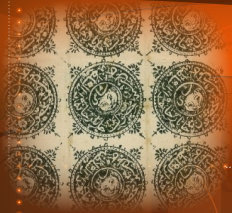





Amir Habibullah Khan (who ruled from 1901 to 1919) was determined to modernise the Afghan postal service. To further this aim he introduced Afghanistan’s first “European-style” stamps in 1907. However, that issue was only an interim step and not without its problems: the sheet size was still too small – only two panes of six could be printed at a time, and the perforating equipment was unsatisfactory and soon abandoned. It can be looked upon as a trial run for the issue which followed it: the 1909-19 series. That series was the first truly “modern” Afghan issue.

·         it was the first Afghan series to be produced by typography 

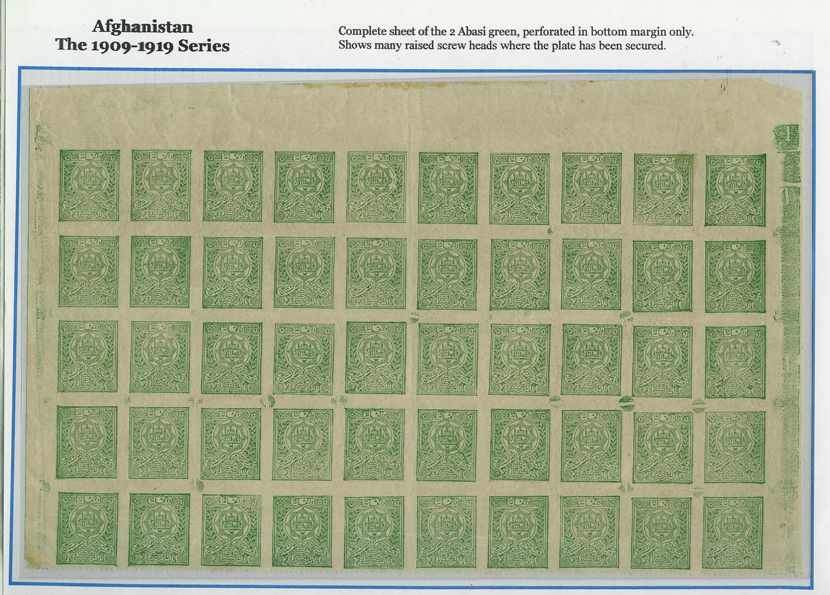
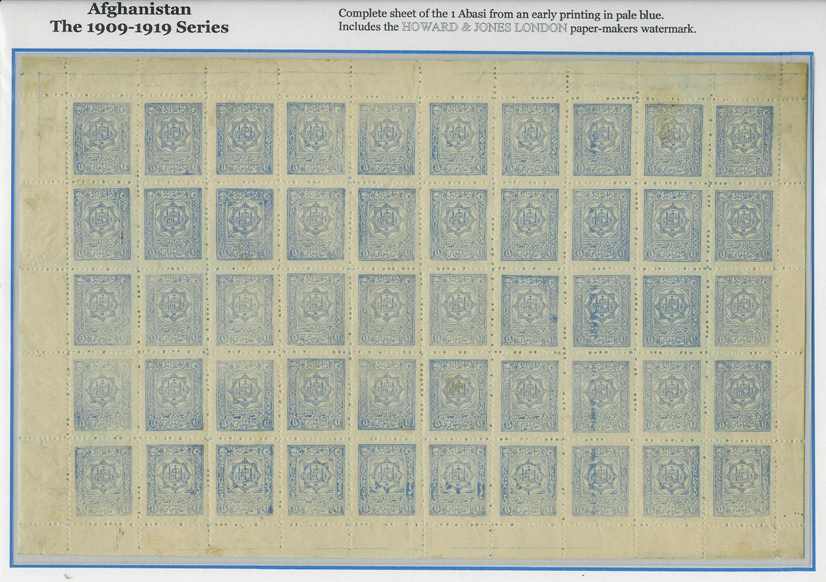
·      the sheet size of 50 stamps was a big improvement on what had previously been managed 

·       it was the first issue to be perforated as a matter of course (although, as will be seen, there were still problems)

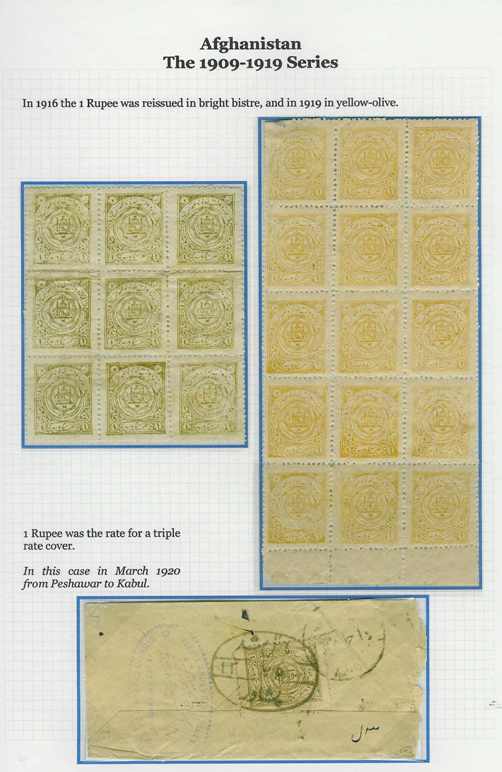
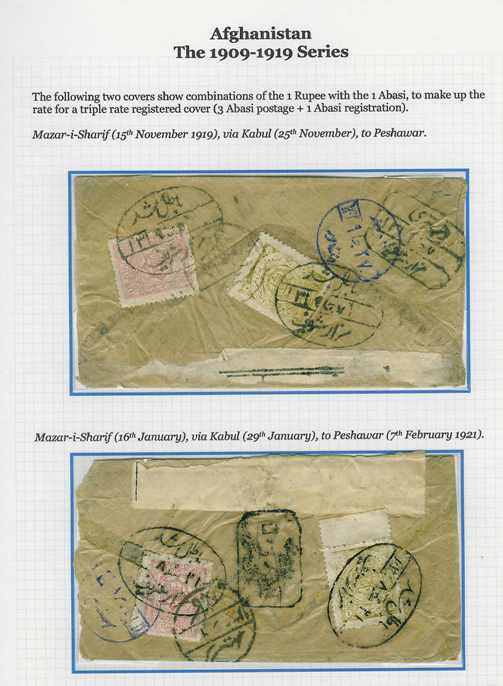
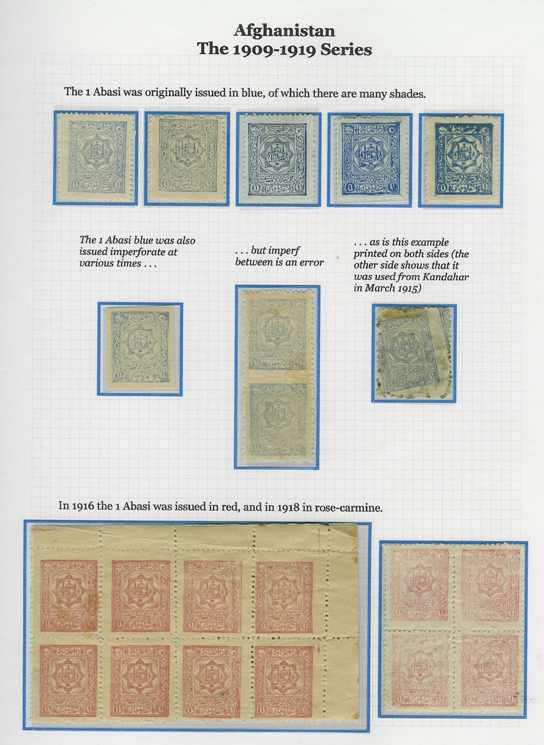
Initially, there were three values: 1 Abasi, 2 Abasi and 1 Rupee (1 Rupee = 3 Abasi).

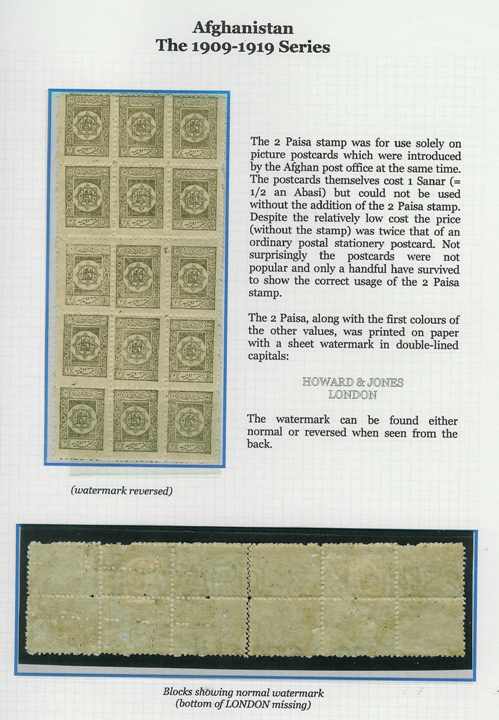
 These three were reissued in different colours in 1916, and again in 1918/19. An additional 2 Paisa value was introduced in 1913 (2 Paisa = 1/10 Abasi).

The 2 paisa

1909_2p


For examples used on postcards, see the Stationery Section of the website.


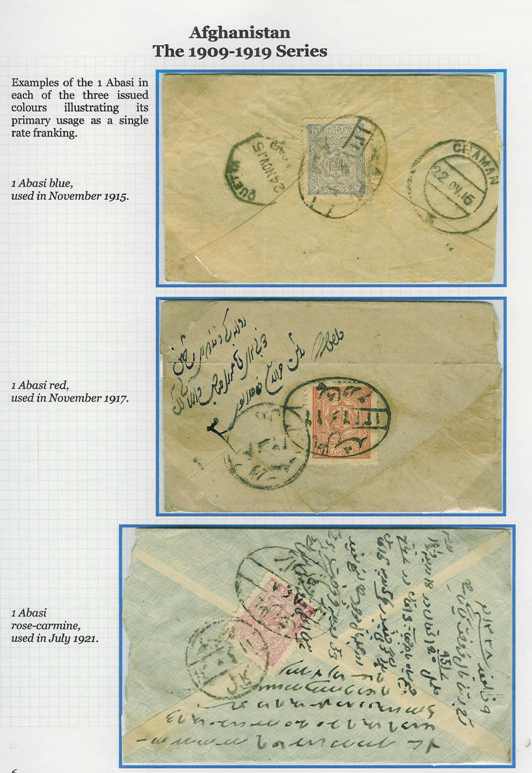
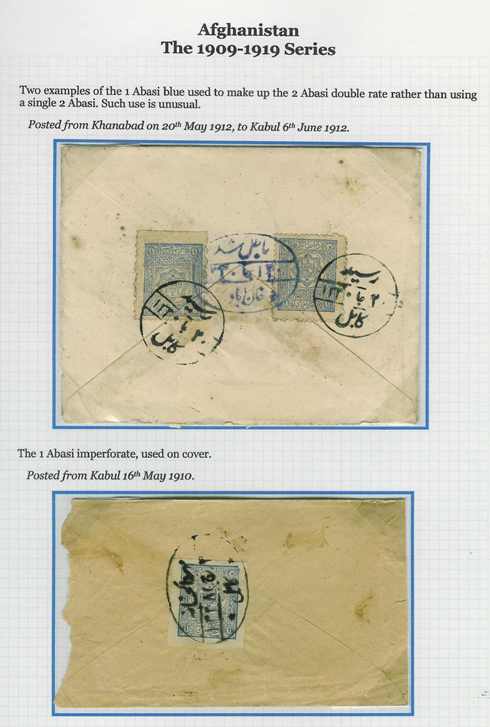
The 1 Abasi
1909_1ab_1


1909_1ab_2


1909_1ab_3


1909_1ab_4


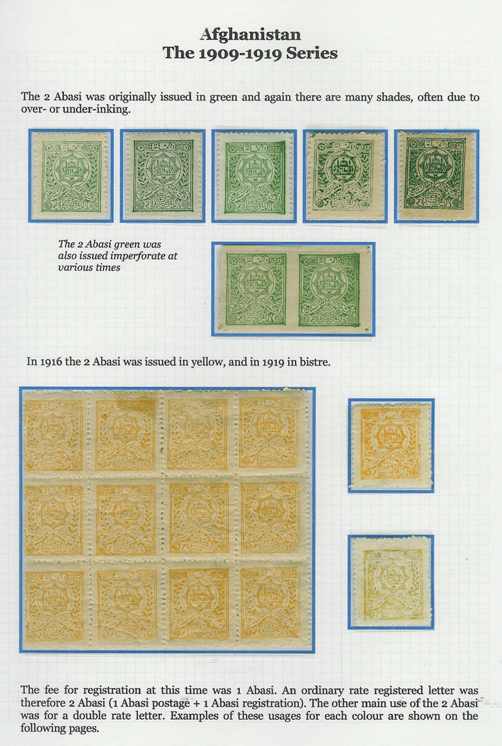
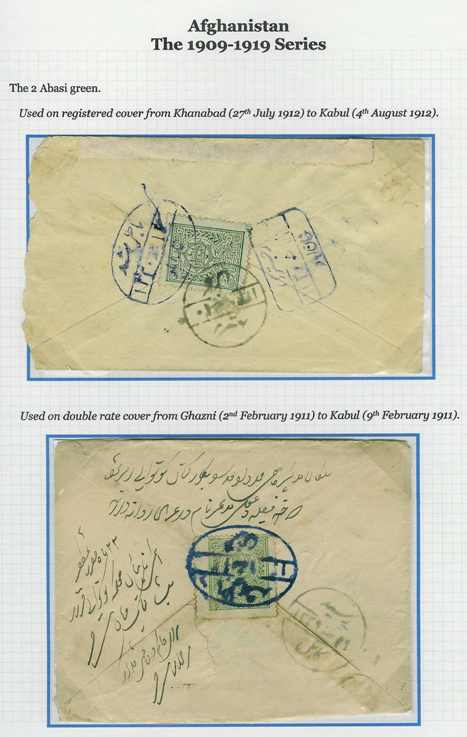
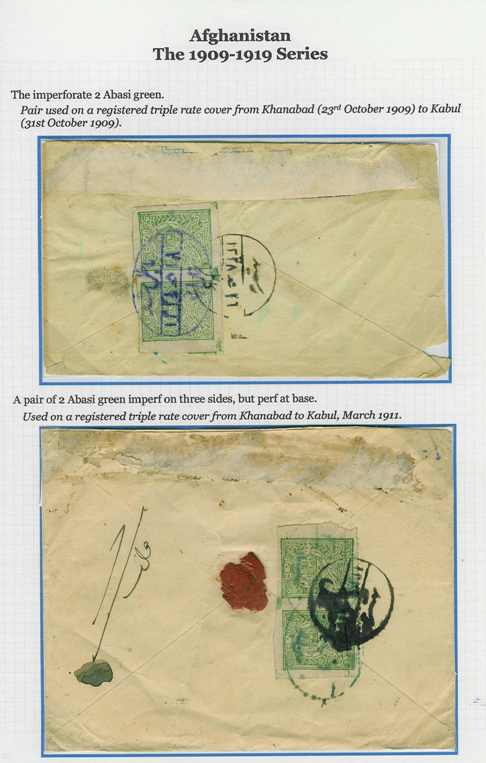
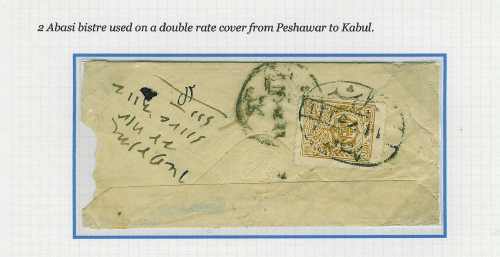
The 2 Abasi


1909_2ab_1


1909_2ab_2


1909_2ab_5


1909_2ab_6


1909_2ab_4


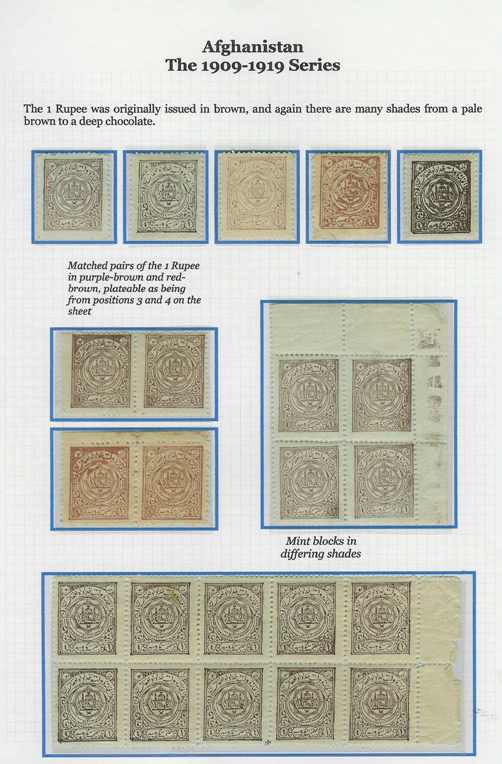
The 1 Rupee


1909_rup_1


1909_rup_2


1909_rup_3
 
© Robert Jack, 2013
 
  Site Map